


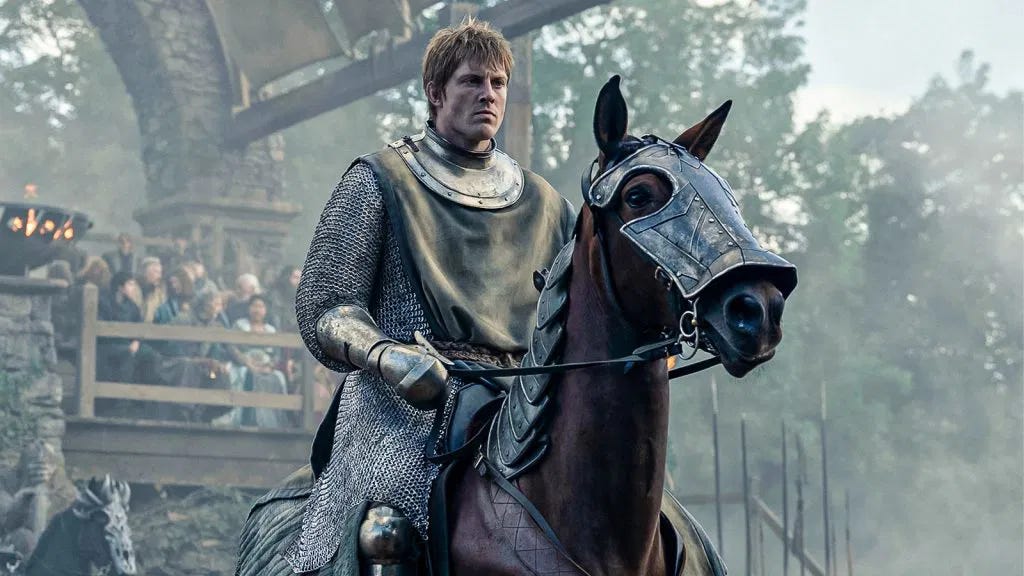
A Knight of the Seven Kingdoms is pulling solid numbers for HBO, and credit where it’s due: “The Hedge Knight” is a decent enough tale. Dunk and Egg have charm, the production values are impeccable, and it scratches a particular medieval itch that audiences clearly haven’t gotten tired of. But the fantasy genre is a vast landscape, and streaming executives keep circling back to the same Westeros zip code while a library of superior material sits gathering dust.
Here are five fantasy novels. that are richer, more compelling, and more worthy of the prestige treatment that Hollywood has somehow managed to ignore.
1. A Theft of Swords by Michael J. Sullivan

The first volume of Sullivan’s Riyria Revelations introduces Royce Melborn and Hadrian Blackwater, a mismatched duo of thieves-for-hire who walk into the wrong job at the worst possible time, ending up framed for the murder of a king and dragged into a conspiracy stretching back centuries. What makes Sullivan’s work remarkable isn’t the epic scope, but the sheer fun of it. Royce is cynical and lethal; Hadrian is idealistic and deadly. Together they’re the best buddy duo the genre has produced since Fafhrd and the Grey Mouser, and their banter carries the story with an energy that feels tailor-made for episodic television. Sullivan was already thinking in arcs when he wrote this, noting that he wanted it to feel like Buffy the Vampire Slayer or Babylon 5, stories with ongoing mysteries that unfold gradually, rewarding patient viewers. While Martin built a world where heroism is systematically punished and everyone you love gets killed to prove a thematic point, Sullivan built one where the heroes are actually worth rooting for.
2. The Dragon Waiting by John M. Ford

Winner of the 1984 World Fantasy Award for Best Novel, John M. Ford’s masterpiece is one of the great lost classics of the genre, a book that Neil Gaiman has flatly stated would have made Ford “George R.R. Martin” if he’d simply written four more novels in its world. Set in an alternate 15th century where the Byzantine Empire never fell, Christianity never dominated Europe, and the Wars of the Roses play out against a backdrop of vampirism, dark magic, and political intrigue that would make Lorenzo de’ Medici blush, The Dragon Waiting is exactly the kind of layered, intellectually serious historical fantasy that prestige television desperately wants to be. Ford assembled a fellowship of four in a Welsh wizard, a Byzantine mercenary, a Florentine physician, and a vampire duke, and sent them into the grinding machinery of English succession politics with the fate of Richard III in the balance. The book predates A Song of Ice and Fire by over a decade and operates on a more sophisticated literary level than anything Martin has produced. That it remains obscure is a genuine cultural crime.
3. A Throne of Bones by Vox Day

Day’s 900-page doorstop is the kind of fantasy that reminds you what the genre is capable of when the author has read Livy instead of just watching the History Channel. Set in the world of Selenoth, where a Roman-style republic called Amorr commands the field with legions of iron discipline while the wider world bristles with orc hordes, wolf-demons, elvish kingdoms, and the gathering darkness of supernatural evil, A Throne of Bones is military fantasy executed with genuine craft. The political maneuvering inside the Amorran Senate is as gripping as anything in the early seasons of Game of Thrones, and the legion battle sequences are better than anything Martin ever committed to the page. More importantly, Day doesn’t share Martin’s fundamental contempt for heroism. His characters can be broken, compromised, and destroyed, but the story doesn’t mistake nihilism for depth. Reviews have noted that it “celebrates heroic ideals” rather than mocking them, and in an era of streaming fantasy that defaults to cynicism, that’s a genuine selling point.
4. Dragon Prince by Melanie Rawn

Published in 1988, Rawn’s opening volume in what became a beloved six-book sequence is the kind of sweeping romantic fantasy epic that built the genre’s mainstream audience, and has been absurdly overlooked by Hollywood and mainstream publishing ever since. Prince Rohan has just inherited the Desert and its vast, sun-scorched lands, and he wants two things: to bring lasting peace to a world of fractious princedoms always on the edge of war, and to protect the last dragons from the lords who see them as sport. His bride, Sioned, is a Sunrunner, one of a gifted class of mystics who weave magic from light itself, and together they make one of the genre’s great power couples. Rawn wraps her dynastic politics in genuine emotional depth, and her system of Sunrunner magic translates visually in ways that would dazzle on screen. Anne McCaffrey called it “marvelous,” and Penguin compared it to what Frank Herbert did for science fiction with Dune. The comparison holds. Dragon Prince has the world-building density, the romantic stakes, and the intergenerational scope to sustain multiple seasons of premium television — without ever needing to wallow in gratuitous darkness to prove it’s serious.
5. Dragonflight by Anne McCaffrey

The book that launched Pern remains one of the most perfectly constructed opening novels in the genre’s history. On a world that forgot the ancient threat called Thread, the dragonriders have become little more than an anachronism, their Weyrs underfunded and their traditions dismissed by a skeptical ruling class. Then the threat returns. Lessa, the last survivor of a conquered hold, bonds with the queen dragon Ramoth, rises to Weyrwoman, and discovers that the only way to save her world is to break every rule of time itself. McCaffrey wrote a story that is simultaneously an intimate character study and a world-historical epic, and she did it in under 300 pages, something Martin couldn’t manage in ten times the word count. The Pern novels carry a warmth and genuine love for their characters that makes the stakes feel real in a way that Westerosi body counts never quite manage. Streaming executives have flirted with Pern adaptations for years. It’s past time one of them actually committed.
The common thread here is craft in service of story, and story in service of characters readers actually care about. The Game of Thrones universe has delivered spectacle. These five novels offer something harder to manufacture: genuine wonder.
What would you add to this list?
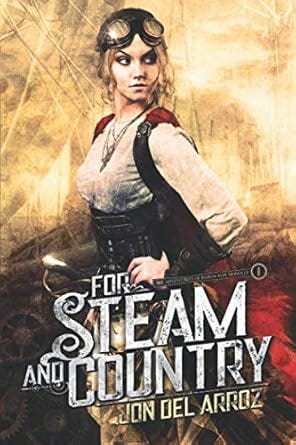
If you’re interested in a fun fantasy world, read The Adventures of Baron von Monocle six-book series and support Fandom Pulse!
NEXT: The Lost Final Chapter: What Anne McCaffrey’s Unpublished After the Fall Is Over Might Have Been
I would love a properly done Pern series.
Is Vox Day ever going to release volume 3 of Arts of Dark and Light?