


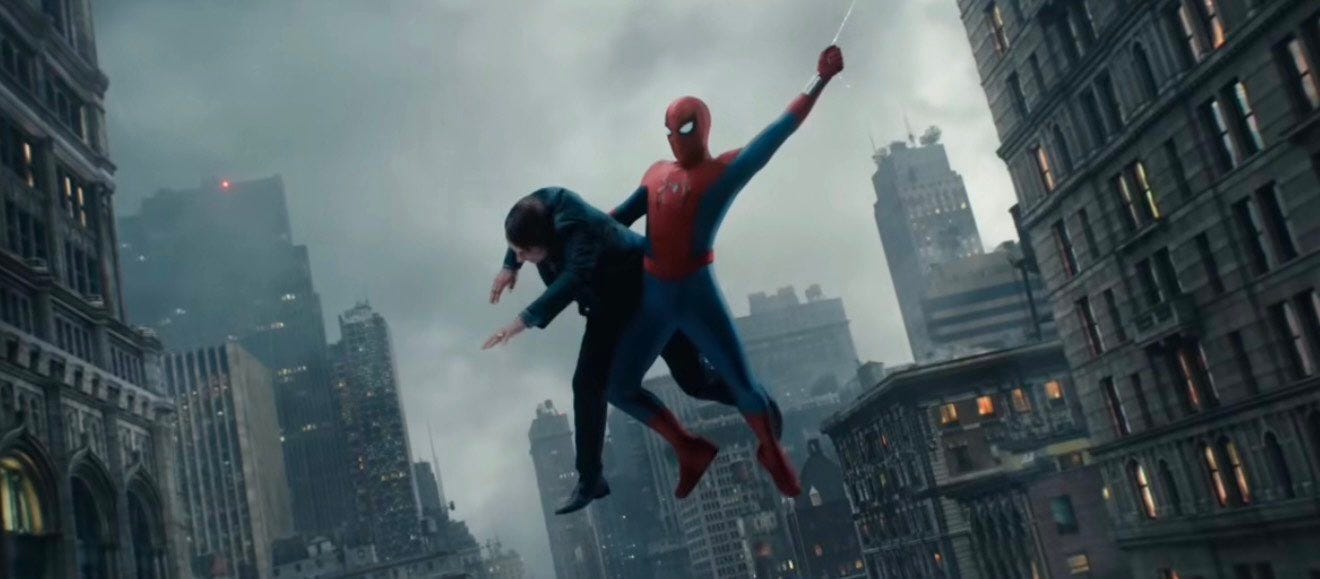
Marvel announced Spider-Man 4 is coming, and the early reporting points toward “Brand New Day” as source material. That’s the post “One More Day” arc where Peter Parker’s marriage to Mary Jane was erased from continuity by a deal with the devil, and the entire supporting cast got reshuffled for a younger, hipper, soap-opera-style run. It was controversial when it published. It’s more controversial now. And there is a century of better Spider-Man stories sitting on the shelf.
Here are ten of them.
1. “Nothing Can Stop the Juggernaut!” (Amazing Spider-Man #229–230)
By Roger Stern and John Romita Jr.
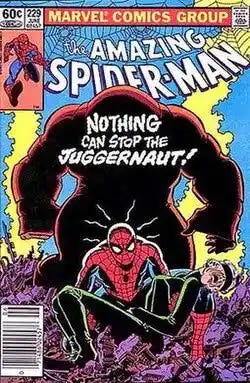
Juggernaut is sent across Manhattan to kidnap Madame Web, and Spider-Man cannot stop him. Webs don’t work. Electricity doesn’t work. A wrecking ball to the face doesn’t work. Every hero Peter tries to call for backup is unavailable. He is completely alone against something he has no answer for.
The film writes itself: a contained survival thriller, one day, one city, one impossible problem. No origin, no multiverse, no comic relief. Just a man who won’t quit against something that cannot be stopped. The “lifting the machinery” energy is already there without the machinery. The drama comes entirely from will versus physics, and Spider-Man losing repeatedly until he finds the one angle that works.
It has never been adapted to film. The Juggernaut has appeared in X-Men pictures, but this story, where he belongs to Spider-Man, has never been touched.
2. Maximum Carnage (Spider-Man #35–37, ASM #378–380, et al.)
14-part crossover, 1993
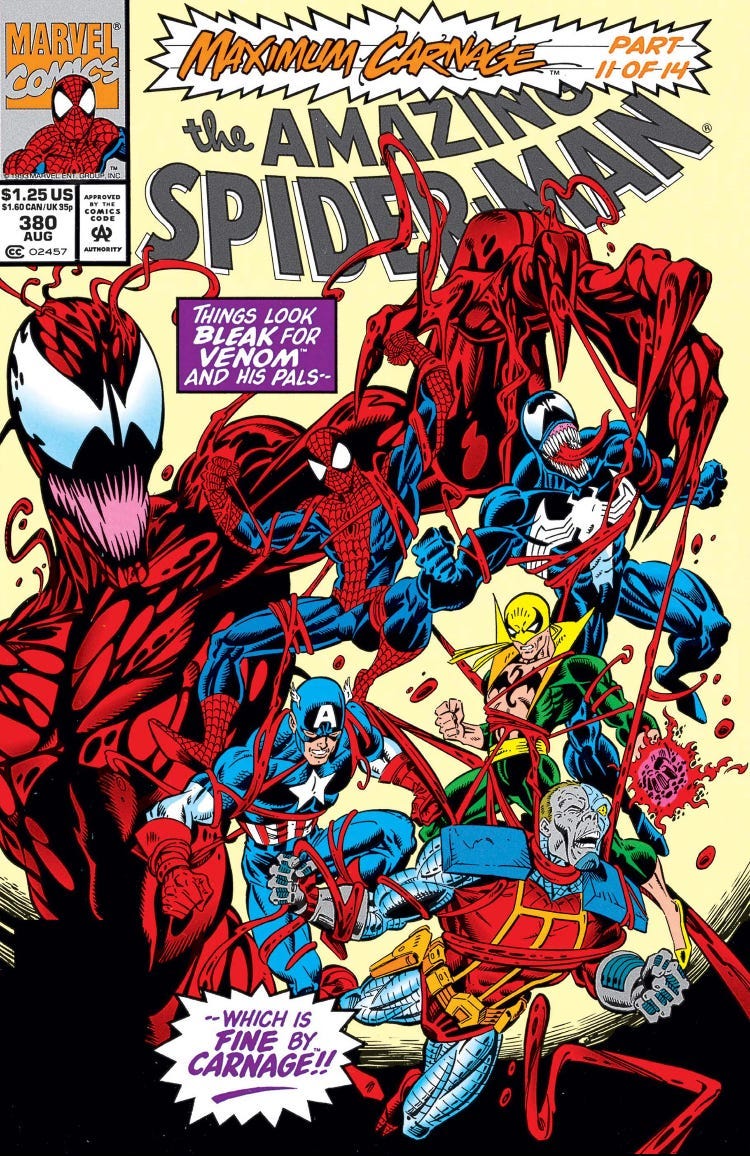
A caveat first: Venom: Let There Be Carnage borrowed Carnage and Shriek from this story. It did not adapt it. The Sony film dropped the hero ensemble, the moral argument at the center of the story, and Spider-Man entirely. What made Maximum Carnage worth reading was never the body count. It was the clash between Spider-Man’s refusal to kill and Venom’s willingness to do whatever it takes, playing out in real time while Manhattan burns.
Carnage builds a murder cult. Shriek, Demogoblin, Doppelganger, and Carrion follow him. Spider-Man pulls together Black Cat, Captain America, Cloak and Dagger, Iron Fist, Firestar, Deathlok, and Morbius, and the alliance frays constantly because half the team agrees with Venom. The story asks a real question: is mercy a virtue or a liability when the villain has none?
Sony took the characters and left the story in the drawer. A real adaptation would be Marvel’s version of a war film.
3. The Clone Saga (1994–1996)
By Terry Kavanagh, Howard Mackie, Tom DeFalco, and others
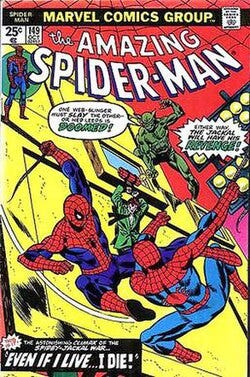
Yes, it ran too long. Yes, it got away from the writers. None of that changes what the core premise is: Peter Parker may be the clone.
Strip the saga down to its spine and you have one of the sharpest psychological premises in superhero fiction. Ben Reilly, the clone, has lived Peter’s life without Peter’s support structure, without Mary Jane, without Aunt May, wandering for years. He is arguably more heroic. And then the question lands: what if Peter is the copy? What if the man who has everything is the manufactured one?
Kaine sits at the dark end of that spectrum, a clone who degenerated and became something monstrous, the path Ben and Peter both escaped.
A tight two-hour film built around those three characters and the Jackal’s manipulation, with Norman Osborn pulling strings from behind the curtain, would be a legitimate science fiction thriller. The identity horror is real. The casting showcase writes itself.
4. “If This Be My Destiny…!” (Amazing Spider-Man #31–33)
By Stan Lee and Steve Ditko
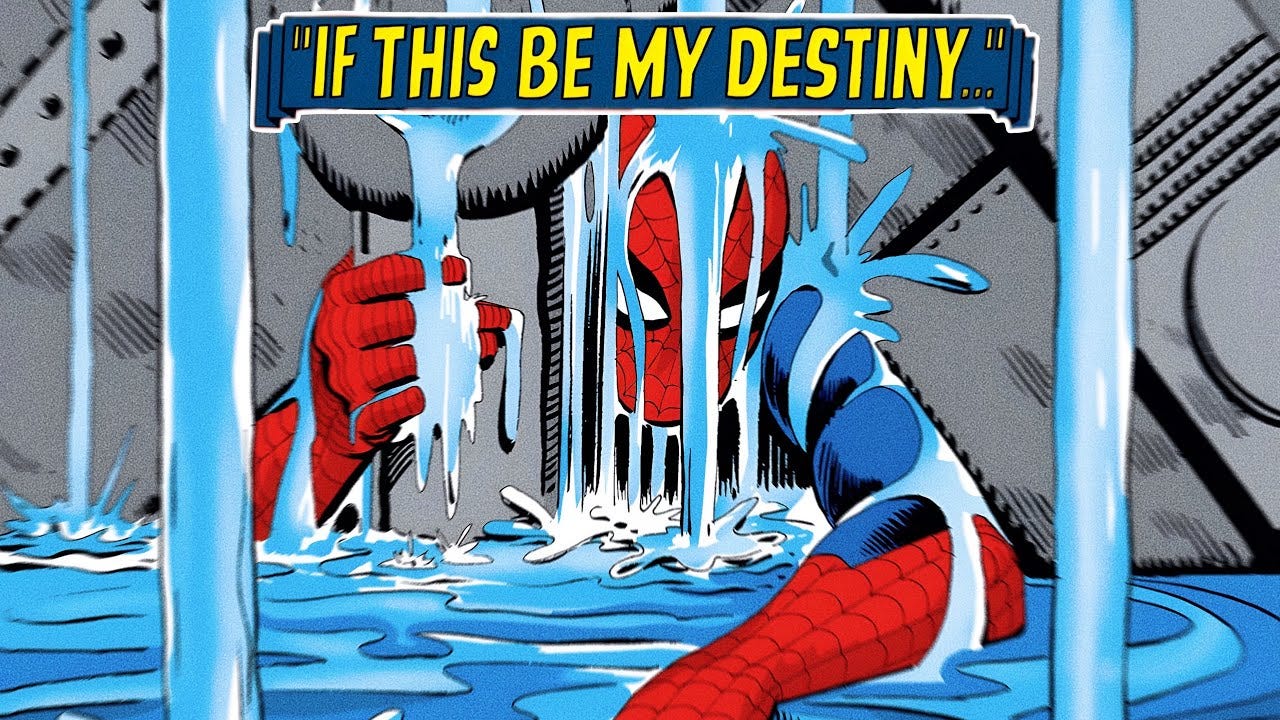
The Master Planner has stolen radioactive isotopes across New York. Aunt May is dying from radiation poisoning caused by a blood transfusion she received from Peter. The only cure is a formula locked in a stolen isotope shipment sitting under a collapsed building at the bottom of the Hudson River. Spider-Man, injured and exhausted, has to lift the ceiling off himself alone.
This is the purest Spider-Man story ever told. The villain is Doctor Octopus in a new identity. The location is claustrophobic and wet and wrong. The stakes are domestic and personal, not cosmic. And the scene where Peter lifts the machinery, talking himself through it panel by panel, is the most-referenced sequence in the character’s 60-year history for a reason.
It has never been the center of a film. Raimi gestured at the emotional register. Nobody has put the actual story on screen.
5. The Original Sinister Six (Amazing Spider-Man Annual #1)
By Stan Lee and Steve Ditko
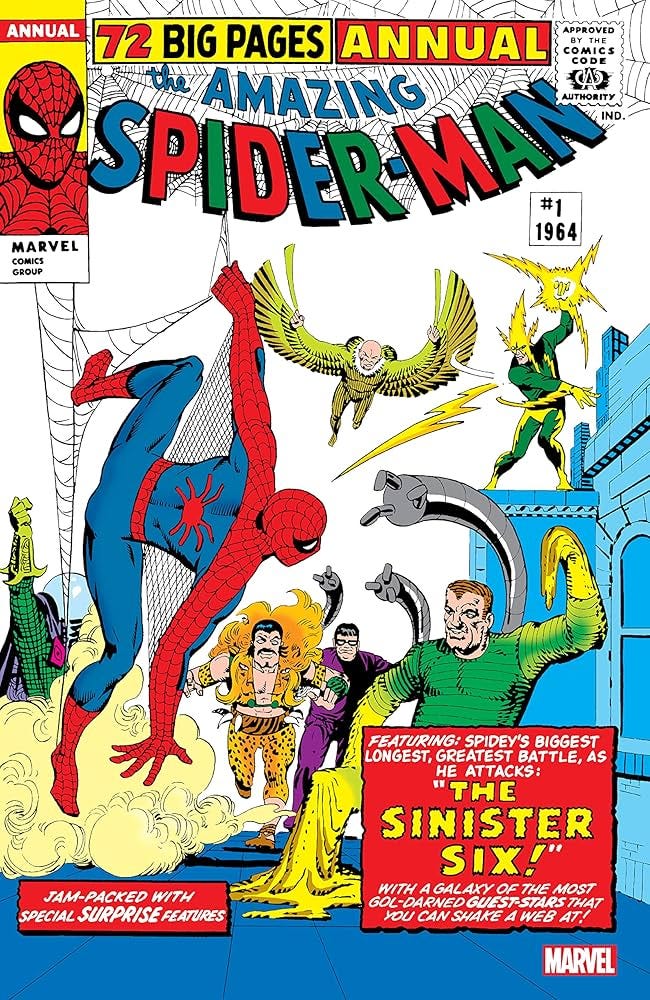
Doctor Octopus, Mysterio, Electro, Kraven, Sandman, Vulture. Each villain holds a hostage. Spider-Man runs a gauntlet, one boss at a time, to rescue Aunt May and Betty Brant.
No Way Home used the Sinister Six concept as multiverse furniture. This story is a clean, propulsive structure: a video game before video games existed, built for the big screen. Each villain gets a set piece. The rogues’ gallery gets room to breathe. The hero has to beat six different kinds of problems in sequence, with no allies and no shortcuts.
Nobody has told this story in a film. The closest thing was the second Garfield picture setting it up and then never delivering.
6. Kraven’s Last Hunt (Web of Spider-Man #31–32, ASM #293–294, Spectacular Spider-Man #131–132)
By J.M. DeMatteis and Mike Zeck
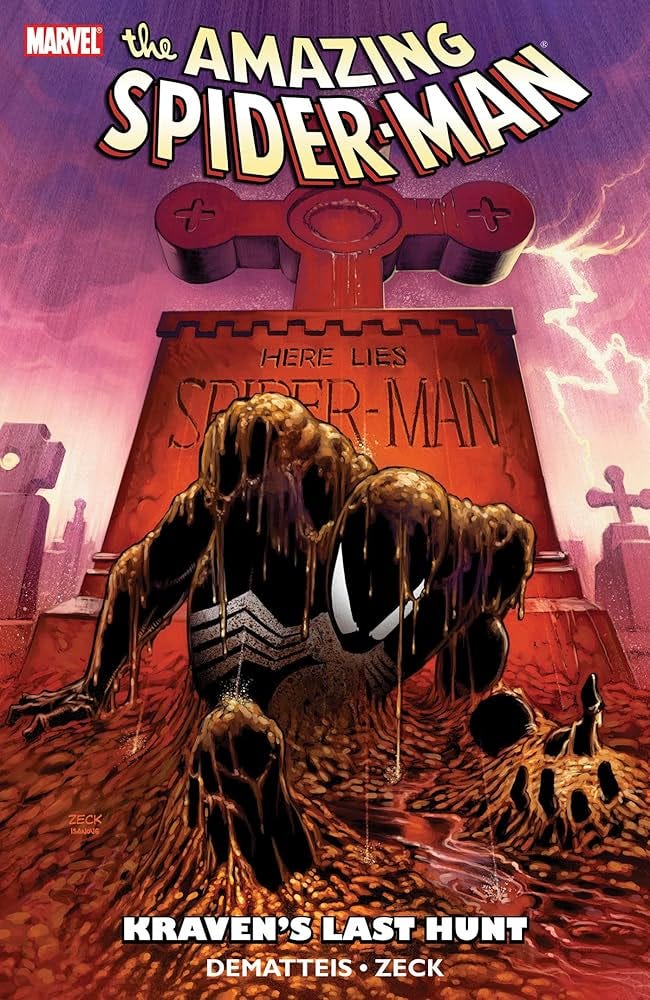
Kraven buries Spider-Man alive, puts on his costume, and becomes him.
That sentence is the pitch. The rest of the story is DeMatteis asking what happens when a villain wins completely and finds it means nothing. Kraven is dying. He has hunted everything. Spider-Man is the one quarry he has never truly defeated, so he poisons him, buries him, takes his identity, and patrols New York as a more brutal version of the hero. When Peter digs himself out of his own grave, Kraven has already won by his own definition.
It ends the only way it can.
Sony made a Kraven film with Aaron Taylor-Johnson in 2024. It was not an adaptation of this story. It was a generic anti-hero origin picture. DeMatteis wrote one of the darkest, most elegiac things ever published under the Marvel banner, and the studio made a movie without the character who gives the story its weight. No adaptation of “Kraven’s Last Hunt” exists.
7. The Death of Jean DeWolff (Spectacular Spider-Man #107–110)
By Peter David and Rich Buckler
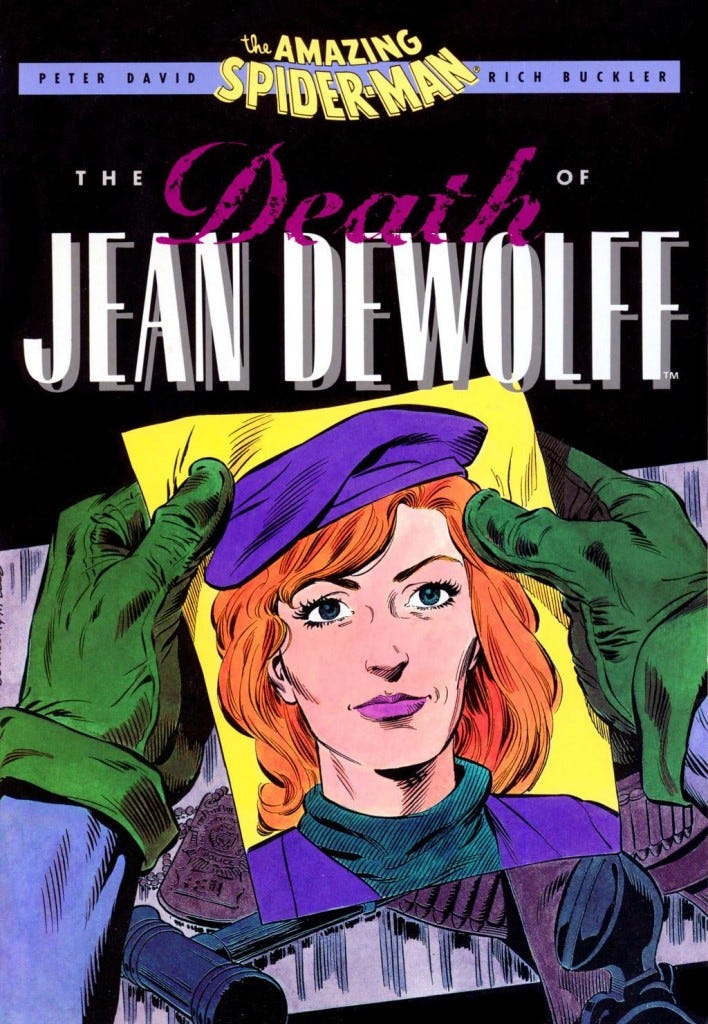
Captain Jean DeWolff is murdered in her apartment on page one. No buildup, no mystery box. She’s dead, and Spider-Man is going to find out who did it.
The killer is Sin-Eater, a vigilante killing people he judges as sinners. He is not a supervillain. He is a deranged man with a shotgun, and that makes him scarier than most of what Spider-Man faces. Peter David put Spider-Man in genuine moral danger here, not physical danger. The story ends with Peter nearly beating an unarmed man to death in the street, and Daredevil having to stop him.
Jean DeWolff has never appeared in a live-action Spider-Man film. The story has never been adapted. It is the template for every street-level Spider-Man story that came after it, and it has never gotten its due on screen.
8. Back in Black (Amazing Spider-Man #539–543)
By J. Michael Straczynski
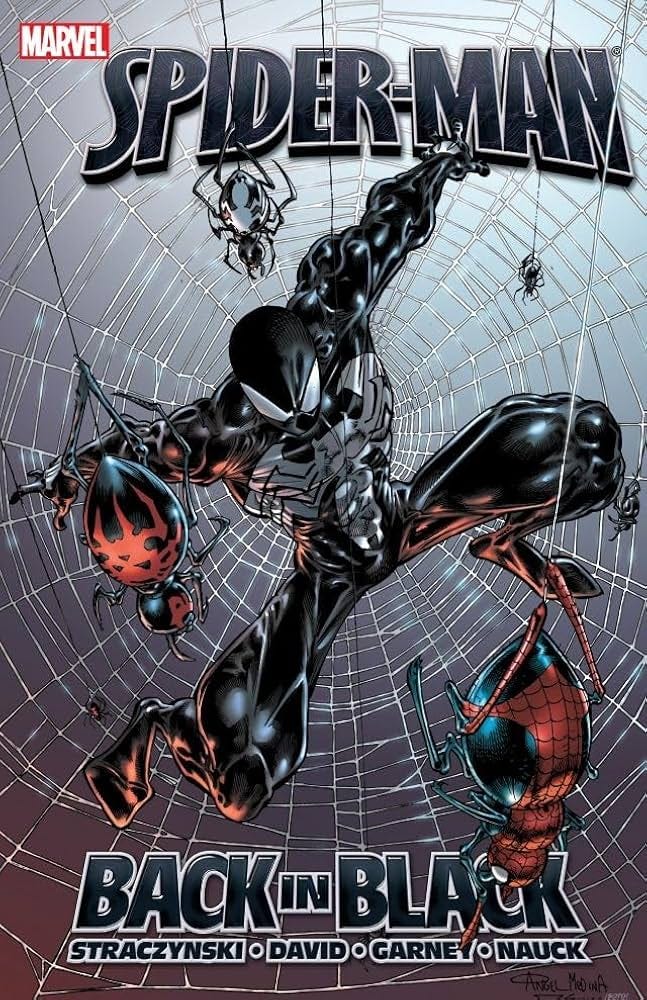
After the events of Civil War, Peter Parker unmasks publicly. A hitman working for the Kingpin takes a shot at him and hits Aunt May instead. Peter puts the black suit back on.
What follows is a revenge story with no moral safety net. Peter is not solving a crime. He is not protecting anyone. He is tearing through the New York underworld looking for the man who gave the order, and nobody is pulling him back until Mary Jane does. The scene where he walks into Ryker’s Island and beats the Kingpin in front of the entire prison population is the single most cathartic Spider-Man moment of the 2000s.
None of it is in any film. The black suit in the Raimi trilogy was about symbiote corruption. This story is about a man making a choice, and the choice being wrong, and making it anyway.
9. The Hobgoblin Saga (Amazing Spider-Man #238–251, plus Roger Stern’s “Hobgoblin Lives”)
By Roger Stern, Tom DeFalco, John Romita Jr., and Ron Frenz
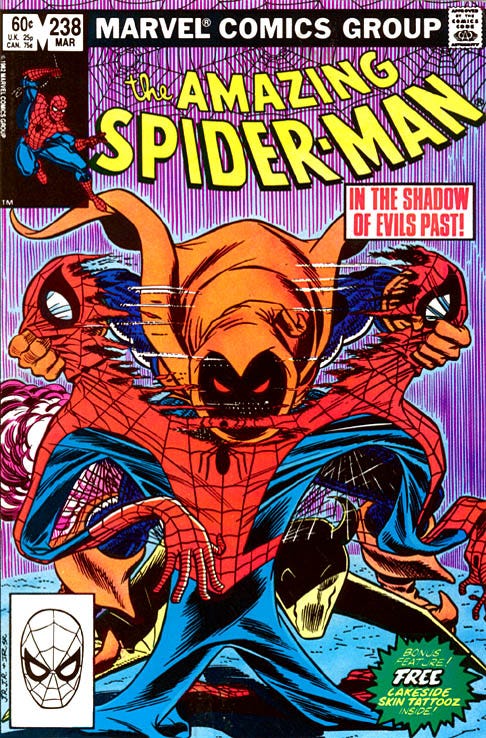
When Norman Osborn was dead and Harry had retired the Green Goblin identity, Roger Stern introduced a new figure in an orange hood raiding Osborn’s old weapons caches. The mystery of who wore the mask ran for years. It was the longest-running identity mystery in Spider-Man history at the time. The real answer, obscured by editorial chaos, was Roderick Kingsley: a billionaire fashion mogul who had no personal grudge against Spider-Man, just a cold-blooded interest in power and leverage.
The MCU has a version of Ned Leeds threading toward a Hobgoblin setup. That’s fine as far as it goes. What has never been adapted is Stern’s actual story: a Spider-Man mystery where the villain is sophisticated, patient, and never what you expect. The Hobgoblin is not Harry Osborn with different colors. He is a completely different kind of threat.
The whole arc, reconstructed with Stern’s original intent intact, would be the best Spider-Man film since Spider-Man 2.
10. “Spider-Man No More!” (Amazing Spider-Man #50)
By Stan Lee and John Romita Sr.
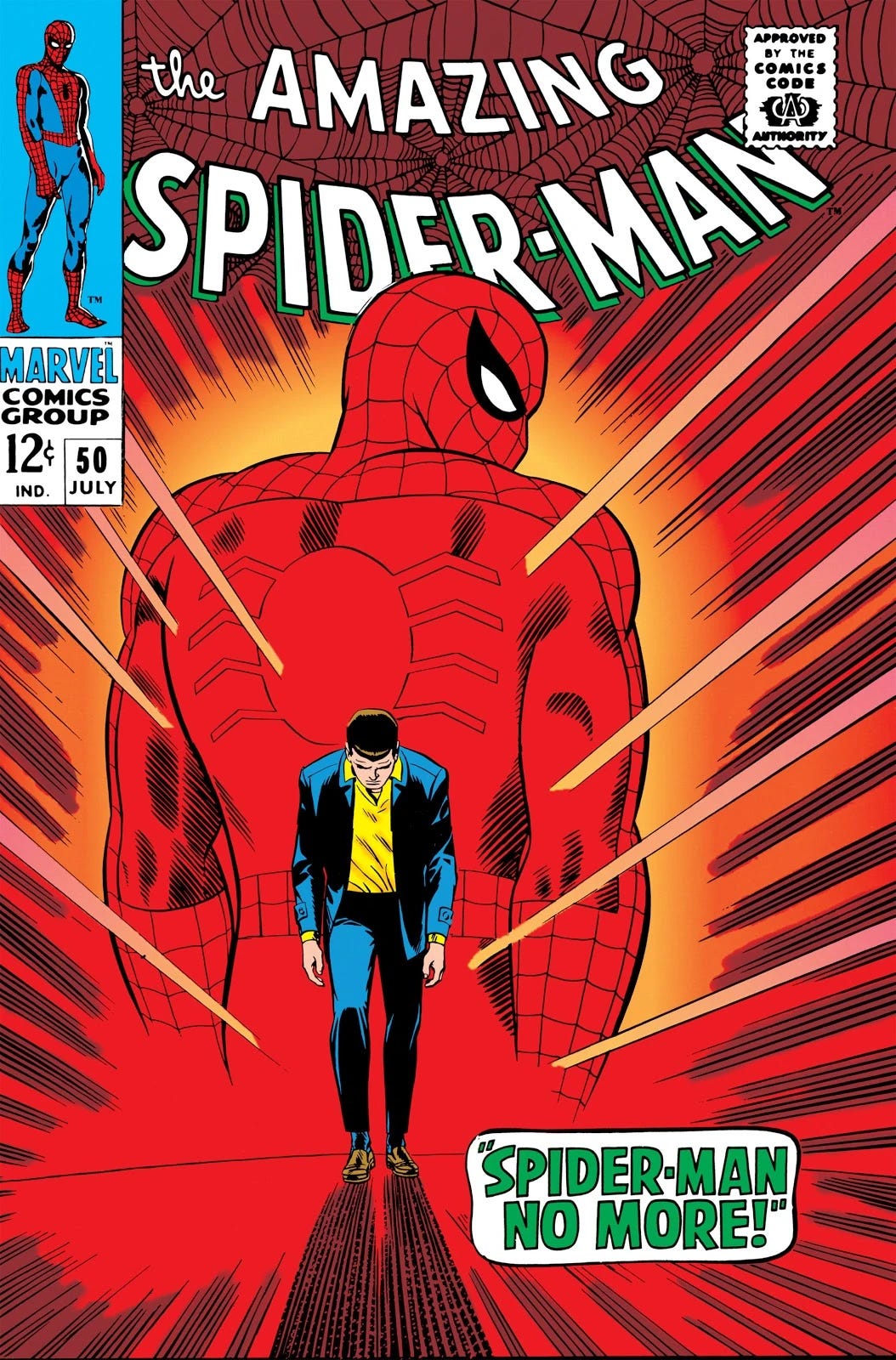
Peter Parker quits. He walks to a trash can, drops the costume inside, and walks away. The Kingpin rises in Spider-Man’s absence. Crime goes up. People get hurt. And Peter watches it happen until he can’t anymore.
Sam Raimi borrowed the image for Spider-Man 2. A single shot of the costume in the trash, a single beat of Peter wanting a normal life. Then the film moved on. The actual story, which is about what it costs a city when its protector stops caring, was never told.
A film built around this premise would work as pure character study. The villain doesn’t need to be elaborate. The Kingpin’s rise in the vacuum Spider-Man leaves is the external plot. Peter Parker’s conscience is the internal one. It ends when he picks the costume back up.
Raimi saw something in it. Nobody has bothered to finish the thought.
All ten of these are sitting in collected editions, in print, available. Any one of them would give Tom Holland something to do besides deal with the fallout from a story that erased his character’s marriage through supernatural intervention.
What would you most want to see on the big screen? Let us know in the comments.
For great comics follow the JDA Comics Substack:

NEXT: Optimus Prime Gets Replaced With A Strong, Female Leader In Transformers Comic
Zendumpster is reason enough to walk away from Spiderman movies, but adding Ruffalo is the cherry on top. I just don't see myself watching Brand New Day. I have zero interest in it.
Not to mention, we wouldn’t have to see Mark Ruffalo’s ugly face again, as Bruce Banner in these ten stories.