


Critical praise doesn’t guarantee commercial success.
The games industry recently experienced a shocking lesson when Mixtape, heralded by IGN as an indie ‘masterpiece’ and earning a 10/10 review couldn’t even reach 5k concurrent players on Steam.
The new James Bond game after 13 years of interactive hiatus was also met with glowing reviews.
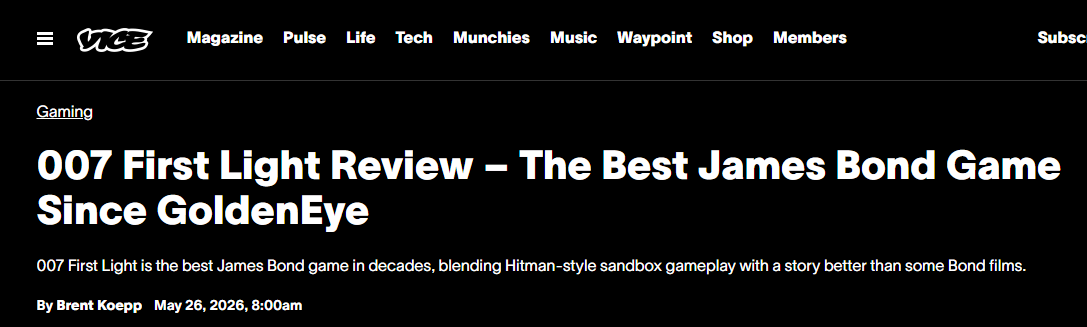
Vice called it “The best James Bond game since GoldenEye”
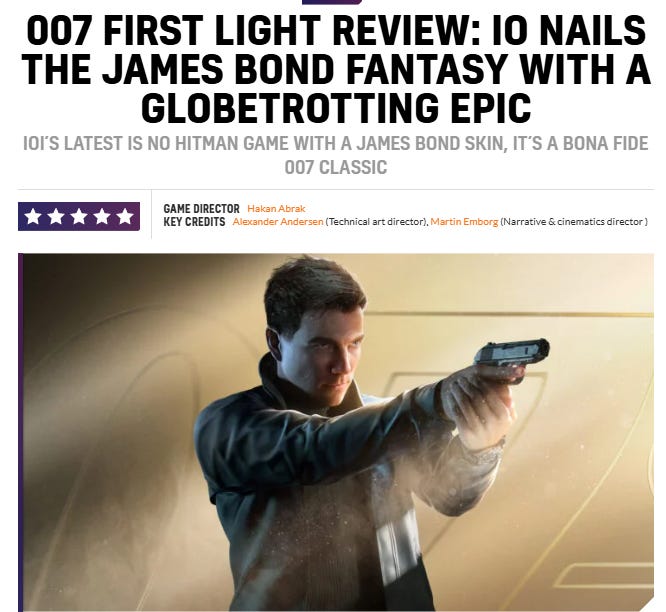
Video Games Chronicle called it “a bona fide 007 Classic” and it “might just be the best James Bond game ever”.
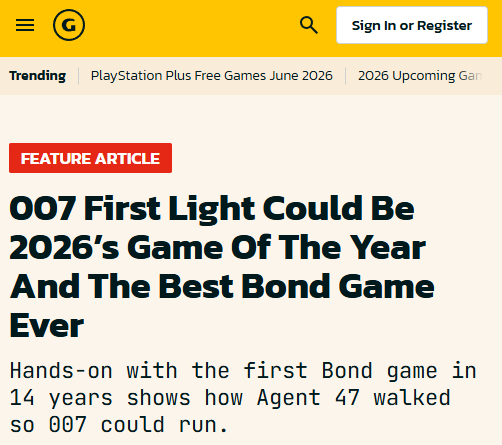
GameSpot celebrated with “007 First Light Could Be 2026’s Game Of The Year And The Best Bond Game Ever”
This is the part where, in any normal release cycle, the publisher gets to take a victory lap. That isn’t what’s happening.
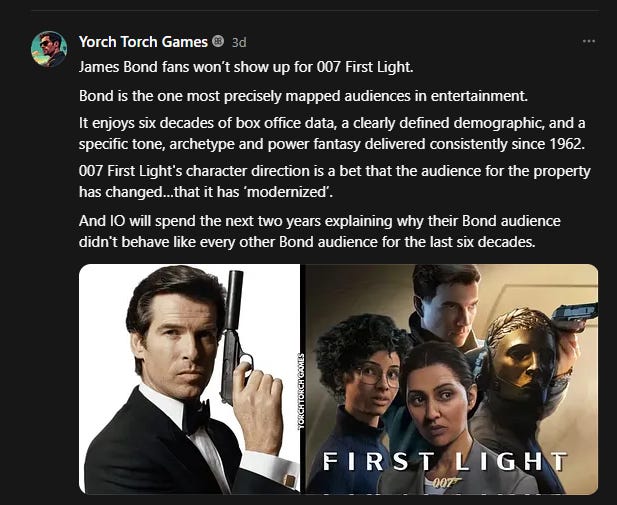
I even called it on my Substack:
And here’s why IO Interactive missed the mark…
What Analysts Started Seeing
Two days before launch, Niko Partners analyst Daniel Ahmad posted a single observation on X that should have stopped every conversation about the game’s critical reception:
“Opening sales aren’t tracking well atm so they’re trying to market it in unique ways. They’ve run an old school marketing campaign so far that wasn’t getting much traction outside of people who grew up with Bond.”

He then added 007 First Light is tracking closer to Indiana Jones and the Great Circle than to Uncharted.
Yes, 007 First Light is tracking closer to Indiana Jones adapted for the modern audience than Uncharted.
The marketing pivot tells you IO Interactive saw this coming. In the final week before launch, the studio voluntarily spoiled a TikTok influencer cameo, Khaby Lame, followed by the reveal that YouTuber Jacksepticeye plays a nightclub employee.
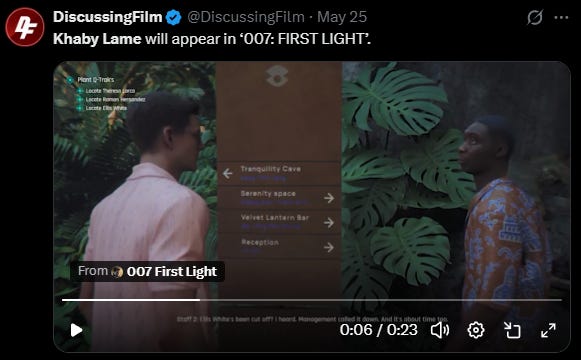
That’s evidence of a studio lacking confidence in its opening bookings.
That’s IO Interactive trying to manufacture reach with whatever tools are still available at launch.
James Bond Is Not Pokemon
Here’s what no one in the games press is willing to say: the James Bond IP is not the asset IO Interactive/Square Enix Europe’s financial and marketing teams assumed it was.
The Bond franchise is one of the most valuable IPs in entertainment history. It has run for 60+ years. It has crossed generations.
But all of this may lead to a mistaken assumption, that the Bond audience exists as a unified, transferable consumer base ready to buy whatever Bond product gets put in front of them.
The market just demonstrated, in real time, that this assumption is wrong.
Bond’s audience is fragmented across three groups, and IO is making a different bet on each one:
Group one: The core Bond fans. They know the franchise inside and out. They are older, which in consumer goods analysis means they have more disposable income. This is the cohort that buys a $70 game without thinking about it. They would buy a Bond game on reflex, especially since it’s been almost 14 years since the last one. But an origin story with modern undertones is precisely the one variant of a Bond product they have no interest in. That’s a massive problem because IO Interactive built the exact configuration of Bond this group would never buy.
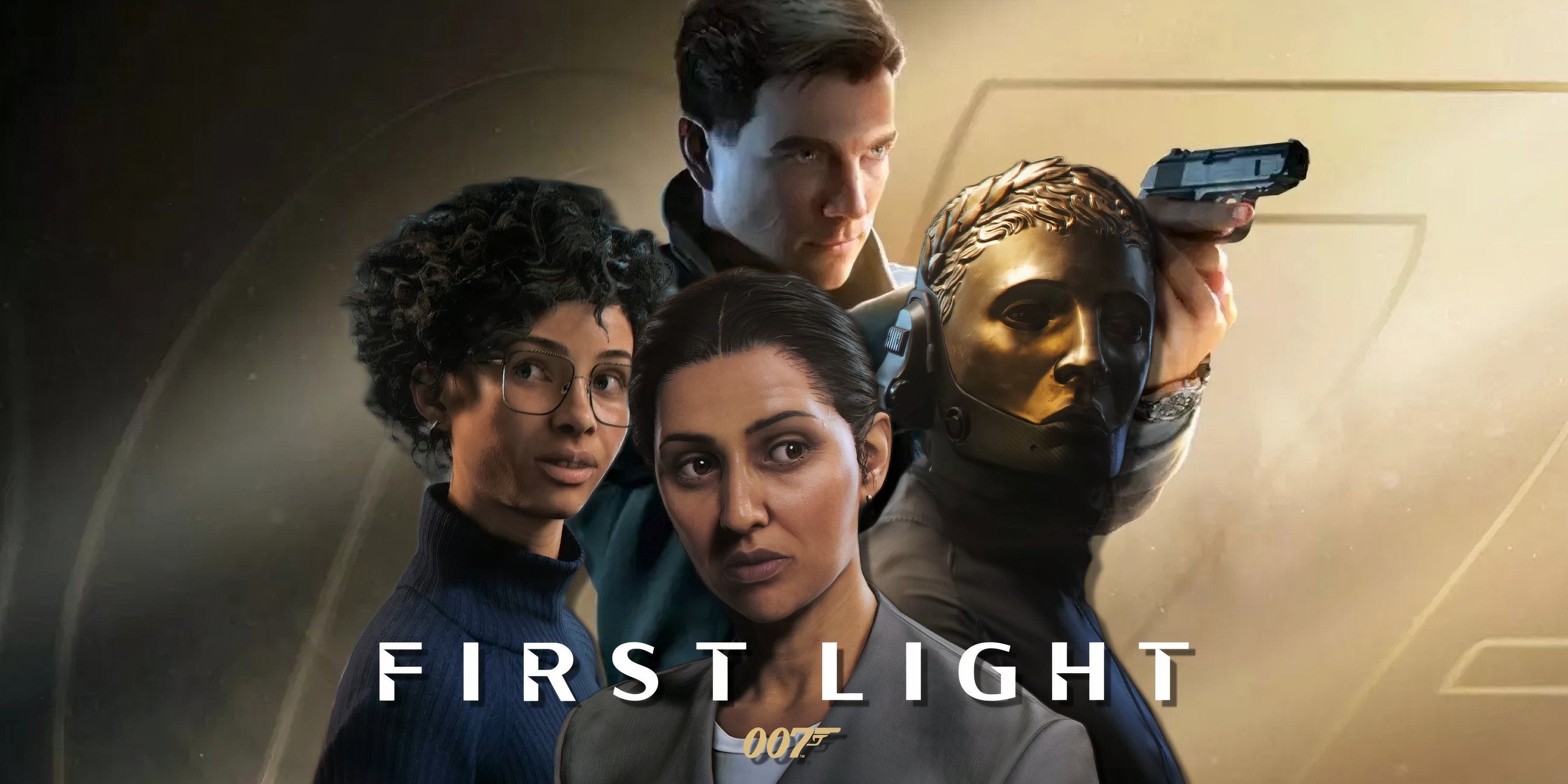
Group two: Bond film viewers under 40. This is the group IO Interactive needs and is failing to convert. They watched Bond with their parents. They saw the Craig films. They do not feel a standing relationship with the franchise, but they will buy a Bond game if it looks essential. First Light does not look essential to them, because First Light is a reboot promising something yet to come. The Bond this audience already knows… finished, lethal, fully formed, is sitting on the shelf in the films. Asking them to invest in a Bond who hasn’t arrived yet, when the Bond they recognize is already available, inverts the value proposition.
Group three: The action-adventure audience that doesn't care about Bond at all. This is the audience that buys cinematic third-person action games on the strength of the genre, not the brand. The fact that First Light isn't reaching them tells you the Bond brand is functioning as a filter, not an amplifier… it's narrowing the addressable market, not widening it.
When one of the most valuable IPs in your category is making your total addressable market smaller instead of larger… you have a liability.
The Origin Story Problem
There is a deeper structural error underneath the marketing problem, and it’s the one that should worry IO Interactive most.
Bond is not a character whose appeal is becoming. Bond’s appeal is being.
This distinction is one of the most important questions in franchise economics, and almost every studio gets it wrong eventually.
Some characters earn their commercial power from the journey toward who they will become. Spider-Man’s origin works because Peter Parker’s powerlessness is the engine of the story. Luke Skywalker’s origin works because the audience wants to watch him become a Jedi. Harry Potter’s origin works because he’s discovering the Wizarding World while learning magic. Neo works because he takes the red pill to find out how deep the rabbit hole goes, even if he’s not sure he’s the One.
These are characters whose narratives are formed by the gap between who they are and who they will become.
Bond is the opposite kind of character. The audience does not show up to watch a young man learn to be competent. The audience shows up because Bond is already the most lethal, most charming, most composed operator in the room. The tuxedo is on. The Martini has been served shaken, not stirred. The woman has been seduced.
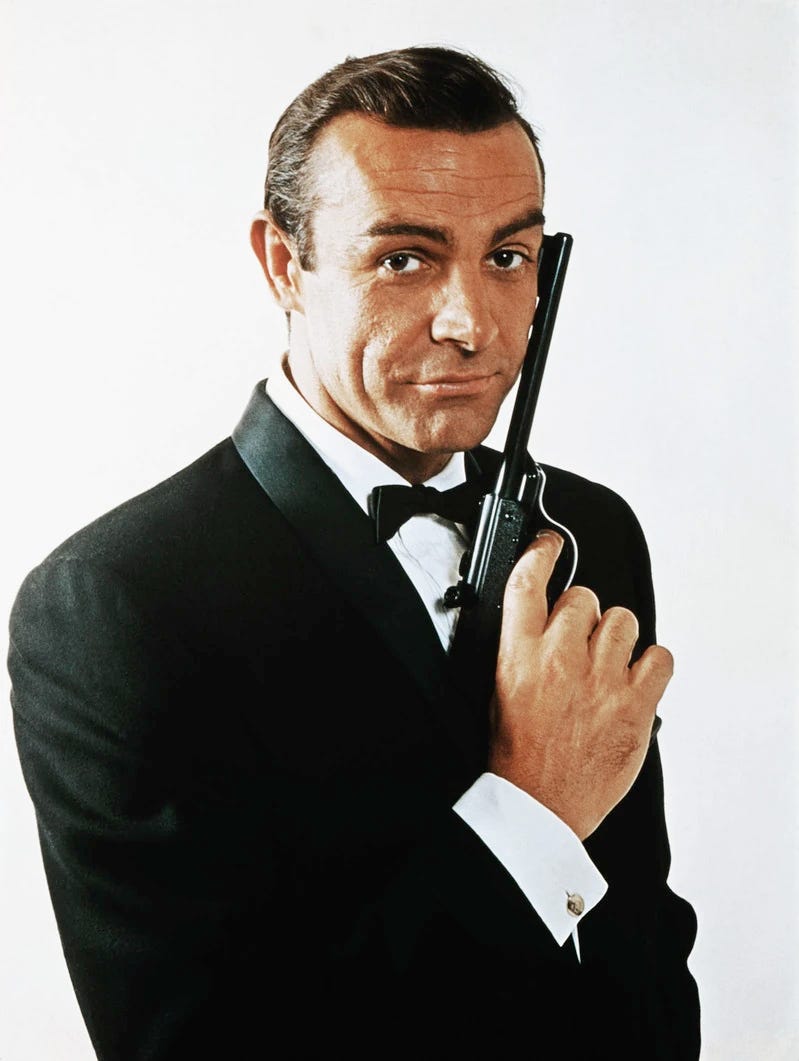
Bond’s value to the consumer is the power fantasy of unflappable mastery… and an origin story is, by definition, the fantasy of not having that mastery yet.
The Casino Royale defense is the one every executive reaches for here, and it doesn’t survive inspection. Casino Royale was a tonal reboot, not a literal origin. Craig’s Bond was already a fully formed lethal operative in his first scene. The film’s ‘origin’ was earning the double-O, a credential, not learning competence.
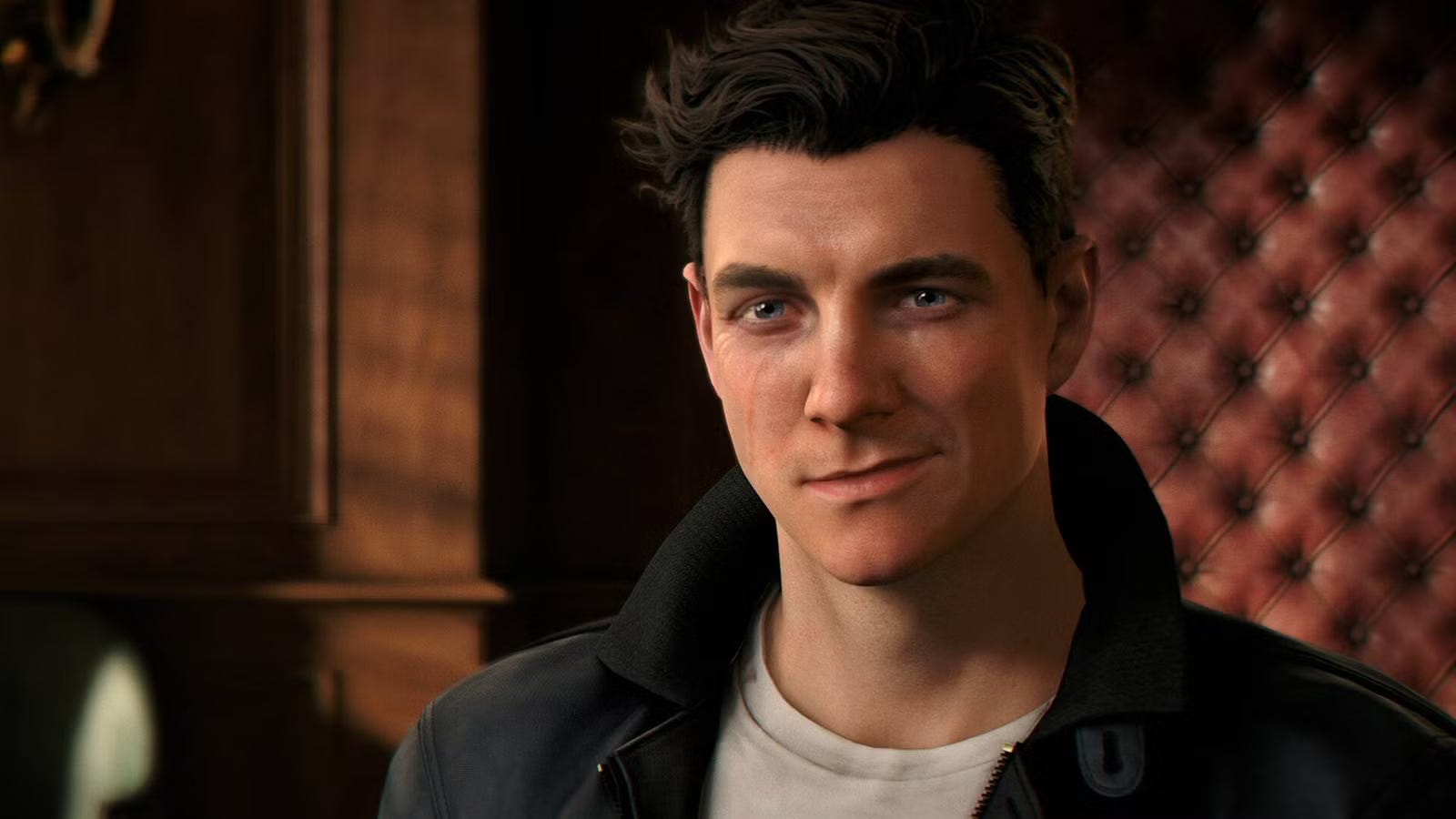
First Light is the literal version. A reckless recruit in MI6’s training program. According to IO Interactive’s own marketing director, this is a Bond who “is good at fighting, and he’s good at guns, but he still needs to train on those things.”
That’s a brand dilution event.
Add to that a cast of characters that looks more like an HR diversity checklist, where every scene resembles every other modern entertainment product, and you end up with a James Bond game suffering from a severe lack of identity.
Closing Thoughts
What makes this situation remarkable is that IO Interactive may have learned a painful lesson that prestige reviews, legacy IP, and cinematic production values are no longer enough to guarantee mass market appeal, yet alone conversion.
The modern games market is brutally efficient at identifying what consumers actually want versus what the industry assumes they should want.
And right now, consumers are signaling something very clearly:
They do not want a vulnerable Bond.
They do not want a Bond in training.
They do not want the fantasy of someday becoming 007.
They want James Bond.
Not the process.
Not the blueprint.
Not the internship.
The finished man.
That is why the late-stage influencer pivot feels so revealing. It was recognition that the traditional marketing campaign failed to expand beyond aging Bond loyalists and failed to convince younger players this was a must-play event.
The irony is that IO Interactive probably had the right studio for the wrong interpretation of the character. Hitman works because Agent 47 already embodies total professional mastery. He enters every room as the most composed and dangerous man in the building. That fantasy aligns perfectly with Bond’s core appeal.
But instead of adapting Bond at the height of his myth, they attempted to reconstruct the myth itself.
And consumers looked at it and asked the most dangerous question any entertainment product can face:
“Why would I want this version?”
ONE LAST THING: The Forge by Yorch Torch Games is the leading newsletter on market intelligence and design strategy for the game industry. Consider becoming a free or paid subscriber for more articles like this.
This is so spot on. I was literally thinking about this when Amazon implied the same sort of path for the upcoming film. I don't want scrub Bond. I want the Bond that jumps off the dam in the opening of Goldeneye.
It's uber woke. What did they expect?